How to Owner-Train a Service Dog in Pennsylvania: A Step-by-Step Plan
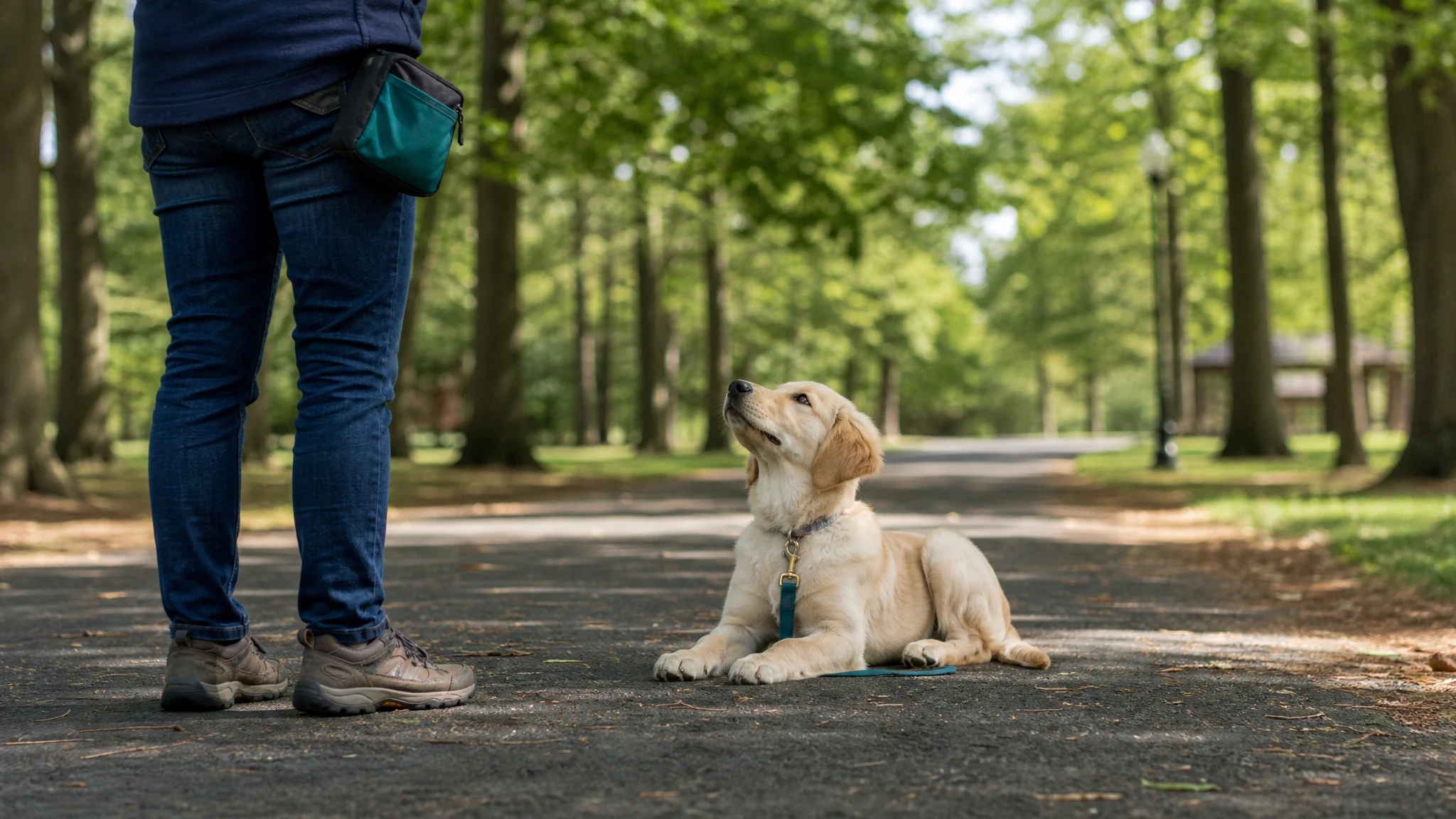
This page explains the law in general terms. It is not legal advice. For a specific situation, contact the agency listed on this site or an attorney.
Many people with disabilities ask how to train a service dog themselves. The ADA does not stop you, and Pennsylvania law protects a person who is training a service dog. This guide walks through a five-stage plan for an owner trained service dog and ties each stage to the rules that apply in Pennsylvania.
It is written for people who want to train your own service dog with humane, reward-based methods. It explains the law in plain English. It is not legal advice.
Key takeaways
- The ADA.gov definition says a service animal is a dog individually trained to do work or perform tasks for a person with a disability. It does not require a certificate.
- Pennsylvania's Human Relations Commission (PHRC) says no certification or license is required for service animals.
- 18 Pa.C.S. 7325 covers a person who is training a service, guide or support dog, not only a fully trained team.
- Work in five stages: screening, foundation obedience, socialization, task training, then public access work.
- Use reward-based methods only. Get help from a professional trainer for task work.
- Emotional support, therapy and comfort animals are not service animals under the ADA.
Table of contents
- Is owner training allowed in Pennsylvania?
- Stage 1: Temperament and health screening
- Stage 2: Foundation obedience
- Stage 3: Socialization
- Stage 4: Task training
- Stage 5: Public access work
- Housing, work and complaints
- Sources
Is owner training allowed in Pennsylvania?
Yes. The ADA.gov Service Animals FAQ defines a service animal as a dog that has been individually trained to do work or perform tasks for an individual with a disability. The definition is about what the dog has been trained to do. It does not say a program or a professional must do the training, and it does not create a registry or a required certificate.
Pennsylvania takes a similar view. The PHRC's guidance describes a service animal as a dog or miniature horse trained to do work or tasks for a person with a disability. It says the Pennsylvania Human Relations Act (PHRA) term "guide animal" means the same thing. The PHRC also states that no certification or license is required.
Service dogs and other animals are not the same
Keep this distinction exact. Under the ADA, emotional support, therapy and comfort animals are not service animals. A service dog is trained to do specific work or tasks. Providing comfort by being present is not a task in that sense.
Pennsylvania housing law treats some animals differently. The PHRC says emotional support animals can still be protected as reasonable accommodations in housing under the PHRA. That is a housing rule. It does not turn an emotional support animal into a service dog for public access.
Why owner training is a serious commitment
Owner training takes steady work over a long stretch of time. Your dog must be reliable in the places you go, and you must be able to show, if asked, what it has been trained to do. Some owners work with a pro for the whole process. Others do the daily training themselves and book professional help for specific skills.
If you want the legal background first, see our overview of service dog training and access rights in Pennsylvania.
Stage 1: Temperament and health screening
Every plan starts with the right dog. Not every dog can do this job, and that is no failure on the dog's part. A dog that is fearful, reactive or easily overwhelmed will struggle with the crowds, noise and long waits that come with public access.
What to look for in temperament
Look for a dog that is calm, curious and recovers quickly after a surprise. Watch how it reacts to new floors, sudden sounds, strangers and other dogs. A good candidate takes food and toys in unfamiliar places and settles when asked to rest.
- Recovers quickly after a loud or sudden noise.
- Shows interest in you without being clingy or frantic.
- Is comfortable being handled, brushed and examined.
- Shows no pattern of aggression toward people or dogs.
- Can relax around distractions.
Health and physical fit
Ask your own veterinarian to check the dog's overall health, joints and body structure. The task you need matters here. A dog that will brace for a person with a mobility disability needs a sound body for that work. Ask your vet what is realistic for the dog you are considering.
Pennsylvania law at this stage
The law does not require a dog to pass any state test before you begin training. The PHRC says no certification or license is required. The PHRC also notes that service animals are subject to any applicable local licensing. We could not confirm the ordinary dog license rule here, so check with your county treasurer or local government about licensing for your dog.
The training-access statute, 18 Pa.C.S. 7325, covers a person training a service, guide or support dog for an individual with a disability. The PHRC defines a trainer as a person who trains or raises an assistance animal for people with disabilities. For exact statutory wording, check the statute on the Pennsylvania General Assembly's site, palegis.us.
Stage 2: Foundation obedience
Foundation skills are the base of everything else. A service dog must stay under the handler's control. The PHRC states that service animals must remain under the user's control, so these basics matter for legal reasons as well as practical ones.
Core skills to build
- Name response: the dog looks at you when you say its name.
- Sit, down and stay: held through distractions.
- Loose-leash walking: no pulling, lunging or sniffing everything.
- Recall: a dependable come when called.
- Leave it: ignoring dropped food and other temptations.
- Settle on a mat: a calm rest under tables and in waiting rooms.
- Calm greetings: ignoring people and dogs unless released.
Reward-based methods only
Use treats, toys, praise and play to mark and pay for the behavior you want. This matches the position of the American Veterinary Society of Animal Behavior (AVSAB), which supports reward-based training. Do not use shock, prong or choke collars. Do not use alpha rolls, scruffing or other dominance methods. They create fear and stress, and a stressed dog is a poor candidate for public work.
Keep sessions short and clear
Short sessions, several times a day, work better than long ones. End while the dog is still keen. Raise difficulty one step at a time: first at home, then in the yard, then on quiet streets. Write down what the dog can do and where. Those notes help later if you work with a professional trainer.
Pennsylvania law at this stage
Early obedience work happens mostly at home and in your neighborhood, so the public access statute matters less now. Keep in mind that the PHRC's control requirement is part of how access rights work. A dog that is out of control is a problem for you, whatever the dog's training status.
Stage 3: Socialization
Socialization means teaching the dog to stay calm and neutral around the world. It does not mean letting the dog greet everyone. A service dog should be comfortable with people, surfaces, sounds and settings, and not interested in interacting with them.
Build a wide, gentle exposure plan
Make a list of what your dog will meet in your daily life, and add to it slowly. Include:
- Different floors: tile, carpet, metal grates, wet surfaces.
- Elevators, automatic doors and escalators where appropriate.
- Traffic, sirens, buses and bicycles at a distance.
- Crowds, strollers, wheelchairs, canes and children.
- Other dogs at a calm distance.
- Veterinary offices and groomers.
Go at the dog's pace
Start at a distance where the dog can still eat and respond to you. Reward calm behavior. If the dog freezes, tries to flee or cannot eat treats, you are too close or the setting is too hard. Move back and try an easier version. Never force a dog to face something frightening.
Pennsylvania law at this stage
This is the stage where 18 Pa.C.S. 7325 starts to matter. Under 7325(a), it is a summary offense for a proprietor, manager or employee of a theatre, hotel, restaurant or other place of public accommodation, entertainment or amusement to refuse, withhold or deny access to a person using a service, guide or support dog or other aid animal. The statute also covers a person who is training such a dog.
The statute text we reviewed does not state age, harness or ID conditions for dogs in training. We did not find them. If you are unsure how a rule applies to your dog, ask the Pennsylvania Human Relations Commission before you rely on it.
Practice outings should be short and have a purpose. A business that is not sure what to expect from a dog in training will be easier to deal with if the dog is calm and clearly under control.
Stage 4: Task training
Task training is what makes a dog a service dog under the ADA. The dog must be trained to do work or perform tasks related to your disability. Examples might include retrieving items, providing physical bracing, alerting to a sound, or interrupting a harmful behavior. The right tasks depend on your needs and your health care team's advice.
Get a professional trainer for this stage
We recommend working with a professional trainer who uses reward-based methods for task work. Tasks must be reliable, safe and matched to your disability. A poorly trained alert or brace can hurt you or the dog. A trainer can help you break each task into small steps and check your timing.
When you look for a trainer, ask how they train and what tools they use. Walk away from anyone who relies on shock, prong or choke collars, or on dominance methods. Be wary of anyone who sells ID cards, vests or registrations as proof of status. There is no official registry under the ADA, and an online registration is not legal proof of anything.
How task training usually works
- Define the task. Describe exactly what the dog should do and when.
- Teach the behavior. Use luring, shaping or capturing with rewards.
- Add a cue. Attach a word or signal once the behavior is reliable.
- Add the trigger. Teach the dog to do the task when the real cue happens.
- Proof it. Practice in new places, with distractions, and when you are tired or stressed.
Learn from Pennsylvania programs
Some Pennsylvania organizations place trained dogs, and one has an owner-training option. Alpha Bravo Canine in Newtown, Bucks County, is a nonprofit that raises, trains and donates service dogs to U.S. military veterans, including veterans with PTSD and TBI. Its website says its services are free and describes an owner-training option for veterans who already have a qualifying dog. Check with the organization directly about eligibility and how its program works.
Other Pennsylvania nonprofits place dogs for different needs, such as Susquehanna Service Dogs in Grantville, Canine Partners For Life in Cochranville, Main Line Deputy Dog in Malvern and the UDS Service Dogs Program in Lancaster. Costs and waitlists vary, and some are closed. Check each program's own website for current details. Looking at what they do can help you decide which tasks to train.
Pennsylvania law at this stage
The ADA definition is where tasks matter most. If it is not obvious that the dog is a service animal, ADA.gov says staff may ask only two questions: whether the dog is a service animal required because of a disability, and what work or task the dog has been trained to perform. Be ready to answer the second question in a sentence or two. You are not required to show paperwork or have the dog demonstrate a task.
Stage 5: Public access work
Public access work is the final stage. The dog learns to do its job calmly in stores, restaurants, medical offices, transit and other places you actually go. This stage overlaps with socialization, but now the dog must also work through distractions while performing its tasks.
Build up gradually
Begin in quiet, dog-friendly spaces and move to busier places. Plan each trip with a clear goal: walk in, settle for ten minutes, leave. Increase time and difficulty as the dog succeeds. If the dog struggles, return to an earlier step. Take breaks and bring water, treats and a mat.
What good public behavior looks like
- Stays at your side or in position without pulling.
- Ignores food, other people and other animals.
- Settles quietly when you stop.
- Does not bark, whine or sniff merchandise.
- Relieves itself only when and where you ask.
- Does its tasks on cue or in response to the trigger.
A dog that cannot meet these standards can be asked to leave under the ADA when it is out of control and the handler does not take effective action, or when it is not housebroken. Be honest about when your dog needs more work.
Vests, tags and ID
Vests, harnesses and patches are optional gear. Neither the ADA nor the PHRC requires them, and the PHRC says no certification or license is required. Gear can help the public understand what the dog is doing, but it is not proof of legal status.
Be careful about misrepresentation. In housing, 68 P.S. 405.6 makes it a summary offense, with a fine not exceeding $1,000, to misrepresent an animal as an assistance or service animal using a false document or a harness, collar, vest or sign. We did not find a general Pennsylvania misrepresentation offense for public access, but the housing rule shows why you should not use fake credentials.
Pennsylvania law at this stage
Once your dog is working, 18 Pa.C.S. 7325 continues to cover you, whether you are still training the dog or it is fully trained. The PHRC guidance on animals is a proposed update that is open for public comment from October 1 to November 15, 2026, so the wording may change. Check the PHRC page for the current version.
Housing, work and complaints
Training is only half the picture. You should also know where else Pennsylvania law applies and where to go if something goes wrong. This is a general description and not legal advice.
Housing
The PHRA covers housing and commercial property. Under the Assistance and Service Animal Integrity Act, 68 P.S. 405.2 defines "service animal" for housing as an animal that qualifies under the ADA or as a guide or support animal under the PHRA or local law. It also defines "assistance animal" as a reasonable accommodation under the Fair Housing Act. Under 68 P.S. 405.3, a landlord may ask for documentation only if the disability or the need for the animal is not readily apparent.
That statute also contains penalties for misrepresentation. Under 68 P.S. 405.5, misrepresenting a disability or the need for an assistance or service animal in housing, or making materially false statements to obtain documentation, is a misdemeanor of the third degree. Be accurate and truthful with landlords.
Employment
The PHRA, at 43 P.S. 955(a), prohibits employers from discriminating because of the use of a guide or support animal due to a person's blindness, deafness or physical handicap. One related section, 43 P.S. 953, has been flagged as recognized as unconstitutional by a Commonwealth Court decision, so do not lean on that section alone. If you have a workplace question, contact the PHRC.
Where to file a complaint
The Pennsylvania Human Relations Commission accepts complaints about public accommodation, housing, employment and education. Complaints are generally due within 180 days of the alleged discrimination. Use the PHRC's complaint page for current steps. Keep notes on what happened, who was involved, the date and any witnesses.
A short checklist before you head out
- Your dog is under your control and housebroken.
- You can state, in plain words, what tasks the dog performs.
- You have checked local licensing and vaccination requirements with your local government and vet.
- You know how to reach the PHRC if you are denied access.
- You are using only reward-based methods and gear.
Results vary by dog and handler. Some dogs do not complete training, and that is a reasonable outcome. If a dog is not suited to the work, a well-loved pet is still a good life.
Sources
- ADA.gov Service Animals FAQ
- Pennsylvania Human Relations Commission, Assistance, Emotional Support, and Service Animal Guidance
- Pennsylvania Human Relations Commission, Filing a Complaint
- Animal Legal and Historical Center, Pennsylvania Consolidated Assistance Animal/Guide Dog Laws
- Alpha Bravo Canine
- Susquehanna Service Dogs, Keystone Human Services
- Canine Partners For Life FAQs
- Main Line Deputy Dog
- UDS Service Dogs Program